

Return to Player rate is the absolute most misinterpreted statistic among UK players who test crash games. get the details, developed by Spribe, does not spin reels. Instead, it displays a multiplier curve that increases until it fails randomly. The published RTP figure of 97% applies to the entire game engine, not to any single round. Comprehending what that percentage actually measures is the primary step toward making informed betting decisions on this unique title.
What Is Aviator and How It Works?
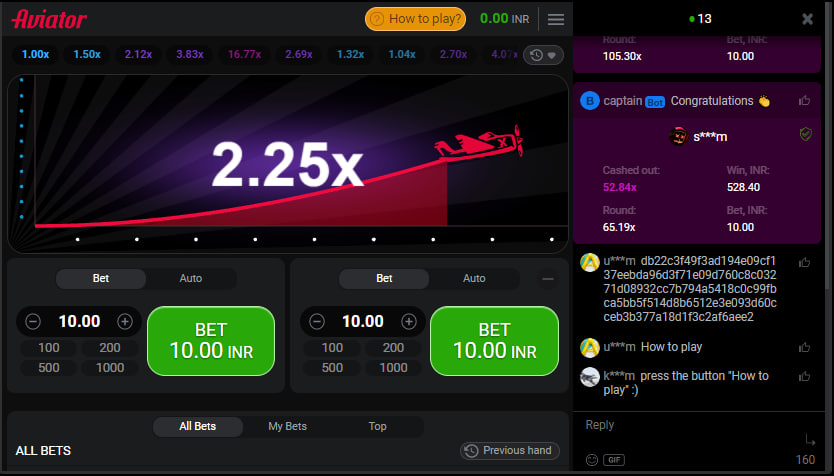
Aviator is a multiplayer crash game where a red aeroplane ascends and climbs while a multiplier rises from 1x upward. The round can end at any moment unexpectedly, and when it does, all active bets that have not been cashed out lose. A provably fair random number generator sets the crash point before the round begins, but that point is kept secret until the flight ends.
Unlike traditional slot machines, there are no reels, rows, or paylines. The entire gameplay loop comprises placing one or two bets per round, watching the multiplier climb, and pressing the cash-out button before the plane flies away. The tension stems from the decision timing. Cash out too early and the payout feels small; wait too long and the entire stake is lost. This simple structure produces a game of nerve rather than pattern matching.
The social element sets Aviator apart from solitary casino games. A live chat panel runs alongside the multiplier display, showing other players’ cash-out points and bet amounts in real time. UK players are able to view when someone locks in a 10x win or when a high roller loses a large wager by holding too long. That transparency fuels both caution and competitive instinct, but it does not alter the underlying mathematics.
How to Play Aviator: A Step-by-Step Guide
There’s no need for a manual to begin playing Aviator. The design is intentionally simple, and you can pick up the complete routine within a single round. New players should first study a few flights without placing bets to get a feel for the countdown, the rising multiplier, and the sudden crash. After you’re at ease, here’s the standard approach for placing and managing wagers.
- Utilize the plus/minus buttons beside the wager panel to set your stake. The game enables one or two bets per round; activate the extra betting slot if you prefer a divided approach.
- Await the wagering window, which starts between rounds and takes about five seconds. Place your bet before the countdown ends.
- Watch the aircraft ascend and the multiplier climb. The withdrawal button shows the current multiplier value as it happens.
- Click cash out before the plane leaves. Your wager is multiplied by the indicated figure, and the payout are added immediately.
- If the aircraft crashes before you cash out, you forfeit the bet. The round history displays the crash value for that flight.
Auto cash-out is a useful feature for strategic play. Set a multiplier value, like 1.80x, and the game will instantly exit the session when that point is achieved. This eliminates the emotional temptation to wait for a bigger reward and helps you stick to a reliable plan. Auto cash-out functions separately for each of the two bet slots, so one stake can be automatic while you manage the other by hand.
Essential Aspects That Shape the Gameplay
Aviator has a few design elements that go beyond the core crash mechanic. The in-game chat and live bet feed foster a social atmosphere that can impact decision-making. When you see someone else cash out at 5x while your bet is still active, it can provoke FOMO or a competitive urge to beat the crowd. This psychological layer is intentional and adds a dimension you won’t find in solitary RNG games.
The provably fair system is the most technically significant feature. After each round, the game displays the server seed, client seed, and the combined hash. Any player can use third-party verification tools to verify that the crash point was predetermined and not manipulated mid-flight. For UK players who value transparency, this cryptographic proof is more convincing than a regulator’s audit alone, because it puts verification directly in the user’s hands.
The round history panel presents the last several hundred crash points. Players often examine this list for patterns, believing that a long sequence of low multipliers must be followed by a high one. Statistically, each round is independent, and past results have no predictive value. The history feed is valuable for reviewing your own cash-out discipline, but don’t mistake it for a forecasting tool.
Stake Range and Maximum Win Potential
Aviator offers a broad bet range that accommodates both cautious beginners and high-stakes high rollers. The lowest stake is generally £0.10 per round, and the highest can hit £100 or more depending on the operator’s configuration. The game permits placing two parallel bets per round, which offers tactical possibilities such as choosing one cautious cash-out target and having the other run for a larger multiplier.
The highest win is not shown as a specific jackpot amount but as a multiplier cap. Spribe has established the ultimate ceiling at 200x the stake, although some operators may set lower limits. At a £100 bet, a 200x cash-out would yield £20,000. That said, hitting that multiplier is uncommon. The game’s crash point can potentially exceed 200x, but the win cap truncates the payout, so staying beyond reddit.com that threshold gives no further benefit.
It is important to review the individual operator’s terms, since win limits and bet ceilings can differ. A UK-licensed casino might limit the highest payout at £250,000 across all games, which would impact only very large wagers. For the standard player staking £1 to £10 per round, the 200x cap is more than sufficient. The dual-bet feature essentially multiplies the tactical depth without affecting the underlying RTP.
Useful Tips for UK Players Evaluating the RTP
Before you commit real money down, verify that the specific operator’s implementation of Aviator shows the correct RTP. Reputable UK-licensed casinos are required to publish game RTP figures, and the information is usually found in the game’s help menu or the provider’s information page. If the displayed RTP differs from 97%, the operator may have configured a lower return version, which is allowed under some licences but should be clearly disclosed.
It’s also a sensible idea to test the provably fair verification process with a few rounds in demo mode. By recording the server seed and client seed after a flight and passing them through a SHA-256 hash calculator, you can separately confirm that the outcome was fair. This exercise instils confidence in the game’s integrity and clarifies the technology. Many UK players skip this step, but it is the only way to directly audit the RTP promise.
Bankroll management works hand in hand with RTP awareness. Once you grasp that the 3% house edge grinds slowly over thousands of rounds, you can define session limits that reflect the expected loss. For example, a £50 budget at £1 per round represents roughly 50 rounds, with a theoretical loss of £1.50. That outlook helps you regard the game as paid entertainment rather than a money-making venture, which corresponds with responsible gambling principles encouraged across the UK.
Volatility and Risk Profile
While RTP explains the long-term average, volatility indicates how wildly immediate outcomes fluctuate around that average. Aviator belongs in the high-risk category. The crash point may land at 1.00x, wiping out all bets instantly, or it can soar past 1,000x, generating huge multipliers that occur rarely. This distribution generates a game where losing streaks can be extended and harsh, broken by uncommon yet impressive victories.
The mathematical framework behind the crash point is a random multiplier taken from a distribution that ensures the 97% RTP. The likelihood of the plane stopping at exactly 1.00x is about 3%, which directly corresponds to the house edge. The chance of hitting 2x is about 48.5%, and the chance of achieving 10x drops to around 9.7%. By 100x, the probability is under 1%. These figures are approximate, but they show how the odds decrease as ambition grows.
For UK players familiar with low-volatility slots with frequent small pays, Aviator can feel brutal. The game does not offer the comfort of regular base-game hits. Rather, it demands a strategic cash-out approach. A player who always cashes out at 1.50x will win often but receive modest returns, while someone chasing 50x multipliers will suffer many successive losses. Volatility is not a defect; it is the core design feature that renders the game compelling.
RTP Aspects In Multiple Betting Strategies
No wagering system can alter the 97% RTP of Aviator. Cash out at 1.20x every round, or go after 100x multipliers — the anticipated long-term return remains exactly the same. The house edge is built-in in the probability distribution of crash points, not in the player’s exit timing. What differs between strategies is the volatility you face and how often you win, not the mathematical expectancy.
The Martingale system, where a player increases twofold the stake after each loss, is frequently discussed in Aviator communities. While it can generate short-term recoveries, it does not improve the RTP and involves catastrophic risk during extended losing streaks. A sequence of five consecutive crashes below 2x, which is statistically plausible, would turn a £1 initial bet into a £32 liability. UK players should understand that such progressions amplify variance without touching the house edge.
A smarter way to consider Aviator is as paid entertainment with a known cost. If you wager £200 over a session, the theoretical cost of play is £6, determined as 3% of the total handle. That figure is not assured, but it places the game in realistic terms. Players who obsess over beating the 97% RTP through clever timing are chasing an illusion, because the crash point is determined before the round begins and cannot be influenced by player action.
Grasping Aviator’s RTP Rate
The RTP of Aviator is fixed at 97%. Over a vast number of rounds, the game engine pays back £97 for every £100 wagered across all players. The remaining £3 is the house edge, which covers the operator’s margin. Individual casinos cannot adjust this percentage, because Spribe seals the game logic and verifies it through cryptographic hashes.
Many players misread the 97% figure as a guarantee that they will personally recover £97 from a £100 session. That is a serious misunderstanding. RTP is a statistical average calculated over millions of rounds. In a single evening, a player might lose 60% of their bankroll or double it several times over. The short-term variance is enormous, and the 97% figure only becomes visible across sample sizes that no individual can realistically play.
Aviator’s RTP is applied uniformly to every bet, regardless of size or timing. There is no hidden mechanic that reduces the return for larger stakes or for players who cash out early. The provably fair system lets anyone confirm the integrity of each round by checking the server seed, client seed, and combined hash after the flight ends. You don’t often see that level of openness in casino games, and it gives analytical players a concrete way to validate the 97% rate is genuine.

Evaluating Aviator’s RTP to Different Crash Games and Slots
Within the crash game category, a 97% RTP is comparable but not exceptional. Games like Bustabit or Roobet’s Crash often promote similar or slightly higher returns, though the exact figures vary with the specific implementation. Aviator’s edge isn’t a higher percentage; it’s the provably fair infrastructure and the refined social interface that Spribe has built around the core mechanic.
When placed alongside traditional online slots widespread in the UK, Aviator’s 97% RTP looks favourable. Many classic slots operate between 94% and 96%, with some high-variance titles dipping below 93%. Book of Dead, for instance, carries a 96.21% RTP, while Starburst sits at 96.09%. Aviator’s 97% figure positions it above these benchmarks, but the comparison is not simple because the gameplay experience and volatility structure are fundamentally different.
The critical distinction is that slot RTP incorporates the contribution of bonus features, free spins, and jackpot pools, whereas Aviator’s return is given entirely through the base game multiplier. There are no separate bonus rounds to expect. Every pound wagered takes part in the same 97% return mechanism immediately. That simplicity appeals to players who don’t want to bother with bonus triggers and prefer a straightforward mathematical proposition.
FAQ
What’s the exact RTP of Aviator?
Aviator’s official RTP is 97%, determined by Spribe. That’s the long-term expected return across all bets placed. Casinos can’t change it. The remaining 3% is the house edge. Bear in mind, that 97% is a theoretical average over millions of rounds — it’s not a promise for any single session.
Will the cash-out timing affect the RTP?
No. The RTP derives from the probability distribution of crash points, not from when you press cash out. Cash out at 1.20x or stay for 50x — over a large number of rounds, the expected return stays 97%. Different cash-out strategies affect the volatility and win frequency you experience, but they do not change the game engine’s mathematical expectancy.
Is it possible to verify that Aviator is fair?
Yes. Aviator runs on a provably fair system using cryptographic hashes. After each round, the server seed, client seed, and combined hash are revealed. You can copy those values into any SHA-256 verification tool to confirm the crash point was predetermined and not manipulated. This process lets you audit every single round independently, without needing to trust the operator or the developer.
What exactly is the maximum multiplier I can cash out?
The multiplier may theoretically climb endlessly, but Spribe imposes a win cap of 200x the stake. If you bet £10 and the plane reaches 250x, the payout will be capped at £2,000. Some operators might set lower limits, so it’s wise https://www.bbc.co.uk/news/topics/c008ql15vdxt to check the specific casino’s terms. The 200x cap is seldom reached and does not significantly impact the 97% RTP.
Is Aviator a slot machine?
No. Aviator is a crash-style game, not a traditional slot. It features no reels, rows, paylines, or symbol combinations. The gameplay revolves around a rising multiplier that crashes at a random point. Although it is listed in casino game lobbies alongside slots, its mechanics are completely different. The term “slot” is sometimes used loosely in marketing, but the game is part of the instant win category.
Does the automatic cash-out feature improve my chances?
No. Auto cash-out does not enhance the RTP or your probability of winning. It just carries out a predetermined exit strategy without emotional interference. By setting a fixed multiplier, you avoid the temptation to hold too long and lose the stake. This can aid in maintaining discipline and consistency, but it does not affect the game’s mathematical edge. The expected return remains 97% regardless.
Why do I encounter long losing streaks in Aviator?
Long losing streaks are a normal consequence of the game’s high volatility. The crash point can land at 1.00x multiple times in a row, and the chance of a round ending below 2x is substantial. These sequences are not indication of a rigged game; they are probabilistically expected over short sessions. The 97% RTP only becomes apparent across thousands of rounds, not in a single evening’s play.